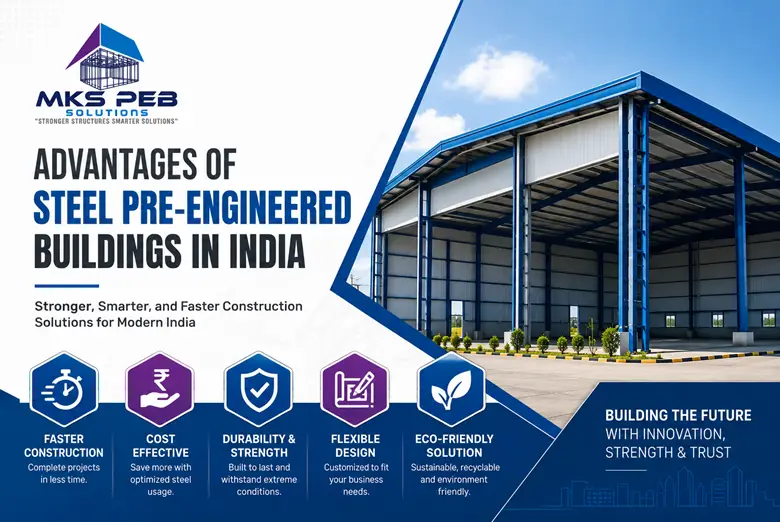
The construction industry in India is rapidly evolving with the growing demand for faster, stronger, and more cost-effective infrastructure solutions. Businesses today require modern buildings that can be constructed quickly without compromising durability and quality. This is where Steel Pre-Engineered Buildings (PEBs) have become one of the most preferred construction solutions across industrial, commercial, and infrastructure sectors.
Pre-Engineered Buildings are revolutionizing modern construction because they offer flexibility, reduced construction time, low maintenance, and superior structural performance. From warehouses and factories to commercial buildings, aircraft hangars, logistics parks, showrooms, and industrial sheds, steel PEB structures are now widely used across India.
With rapid urbanization and industrial growth, companies are shifting from traditional concrete construction to steel pre-engineered buildings for long-term efficiency and better returns on investment. In this blog, we will explore the major advantages of steel pre-engineered buildings in India and why they are becoming the future of modern infrastructure development.
What Are Steel Pre-Engineered Buildings?
Steel Pre-Engineered Buildings are structures designed and manufactured using advanced engineering techniques before being assembled at the construction site. The building components are fabricated in factories under controlled conditions and then transported for installation.
A typical PEB structure includes:
- Primary steel frames
- Secondary structural members
- Roof and wall cladding
- Insulation systems
- Ventilation systems
- Skylights and accessories
- Mezzanine floors
- Crane systems
Unlike traditional construction methods, PEB structures are designed according to exact project requirements, ensuring maximum structural efficiency and minimal material wastage.
1. Faster Construction Time
One of the biggest advantages of steel pre-engineered buildings is quick project completion.
Traditional RCC construction takes a significant amount of time because most work is completed on-site. However, PEB structures are manufactured in factories simultaneously while foundation work is completed at the site. This parallel process drastically reduces overall project duration.
Benefits of Faster Construction
- Early project completion
- Faster business operations
- Reduced labor dependency
- Lower construction delays
- Quick return on investment
Industries such as warehousing, logistics, manufacturing, and e-commerce greatly benefit from rapid infrastructure development.
2. Cost-Effective Construction Solution
Cost savings are another major reason why steel pre-engineered buildings are gaining popularity in India.
PEB systems use optimized steel sections designed according to load requirements, which reduces unnecessary material usage. Factory fabrication also minimizes wastage and improves production efficiency.
How PEBs Reduce Costs
- Reduced material wastage
- Lower labor costs
- Faster installation
- Reduced maintenance expenses
- Lower transportation costs
- Minimal construction errors
For businesses looking to build industrial or commercial facilities within budget, steel PEB structures offer excellent value for money.
3. High Durability and Structural Strength
Steel pre-engineered buildings are highly durable and capable of withstanding harsh environmental conditions.
These structures are designed using high-quality steel components that provide excellent strength and stability. PEB structures can resist:
- Heavy wind loads
- Earthquakes
- Extreme weather conditions
- Corrosion
- Moisture damage
- Fire risks
This makes steel buildings suitable for different climatic regions across India.
The long lifespan of steel structures also ensures reduced repair and replacement costs over time.
4. Flexible and Customizable Design
Another important advantage of steel pre-engineered buildings is design flexibility.
PEB structures can be customized according to specific industrial or commercial requirements. Businesses can easily modify layouts, dimensions, roofing systems, and interior space utilization.
Common PEB Applications
- Industrial warehouses
- Manufacturing plants
- Factory sheds
- Cold storage facilities
- Commercial complexes
- Shopping malls
- Aircraft hangars
- Agricultural buildings
- Metro stations
- Sports facilities
The flexibility of steel structures allows businesses to expand or modify their facilities in the future with minimal disruption.
5. Eco-Friendly and Sustainable Construction
Sustainability has become an important factor in modern construction, and steel PEB buildings support environmentally friendly practices.
Steel is one of the most recyclable construction materials in the world. Most steel components used in PEB structures can be reused or recycled, reducing environmental impact.
Environmental Benefits of PEB Structures
- Reduced construction waste
- Lower carbon footprint
- Energy-efficient insulation systems
- Recyclable building materials
- Reduced site pollution
Businesses looking for green building solutions often prefer steel pre-engineered buildings because they support sustainable development goals.
6. Low Maintenance Requirements
Compared to traditional concrete structures, steel pre-engineered buildings require less maintenance.
Modern steel structures are coated with protective finishes that improve resistance against corrosion, rust, and weather damage. This significantly reduces maintenance expenses over the building’s lifespan.
Maintenance Advantages
- Long-lasting paint coatings
- Corrosion-resistant steel
- Minimal repair costs
- Reduced structural deterioration
- Better long-term performance
For industrial facilities and warehouses, lower maintenance directly improves operational efficiency and profitability.
7. Better Space Utilization
Steel pre-engineered buildings provide large column-free spaces, making them ideal for industrial and commercial applications.
The clear-span design allows businesses to maximize interior space without unnecessary obstructions.
Benefits of Clear-Span Structures
- Better storage capacity
- Efficient machinery placement
- Improved workflow management
- Flexible interior layouts
- Enhanced operational productivity
Warehouses, logistics hubs, and manufacturing plants benefit greatly from open-space structural designs.
8. Energy Efficiency
Modern steel PEB buildings can be designed with energy-efficient insulation systems, ventilation solutions, and natural lighting features.
These features help reduce electricity consumption and improve indoor comfort levels.
Energy-Saving Features
- Roof insulation systems
- Wall insulation panels
- Skylights for natural lighting
- Ventilation systems
- Solar panel compatibility
Energy-efficient buildings help businesses reduce operational costs while supporting environmentally responsible infrastructure development.
9. Easy Expansion and Future Modifications
Business requirements often change over time, and steel pre-engineered buildings make expansion easier.
PEB structures are designed for future scalability, allowing companies to extend their buildings without major reconstruction work.
Expansion Benefits
- Easy building extensions
- Minimal operational disruption
- Lower renovation costs
- Flexible structural modifications
This adaptability makes PEB structures a smart long-term investment for growing businesses.
10. Ideal for Indian Industrial Growth
India’s industrial and infrastructure sectors are growing rapidly due to increasing demand for manufacturing, logistics, warehousing, and commercial development.
Government initiatives such as:
- Make in India
- Smart Cities Mission
- Industrial corridor projects
- Infrastructure modernization
- Logistics sector expansion
have significantly increased the demand for steel pre-engineered buildings.
PEB structures provide the speed, flexibility, and cost-efficiency required for large-scale infrastructure development across India.
Why Businesses Prefer Steel Pre-Engineered Buildings
Businesses today prefer steel PEB structures because they offer:
- Faster project execution
- Lower construction costs
- Superior durability
- Flexible design options
- Eco-friendly construction
- Long-term performance
- Reduced maintenance
- Easy future expansion
These advantages make pre-engineered buildings one of the most practical and profitable construction solutions for modern industries.
Conclusion
Steel Pre-Engineered Buildings are transforming the construction industry in India with their speed, strength, flexibility, and cost-effectiveness. As industries continue to expand and infrastructure demands increase, PEB structures are becoming the preferred choice for businesses seeking reliable and future-ready building solutions.
From warehouses and factories to commercial spaces and industrial facilities, steel pre-engineered buildings provide unmatched advantages compared to traditional construction methods. Their faster construction time, low maintenance requirements, energy efficiency, and scalability make them a smart investment for businesses across various sectors.
As India moves toward rapid industrialization and sustainable infrastructure development, the demand for steel pre-engineered buildings will continue to grow. Companies looking for durable, efficient, and modern construction solutions can benefit greatly from adopting advanced PEB technology for their projects.
FAQs
1. What are steel pre-engineered buildings?
Steel pre-engineered buildings are factory-designed and manufactured steel structures that are assembled at the construction site. These buildings are widely used for warehouses, factories, industrial sheds, commercial buildings, and logistics parks.
2. Why are pre-engineered buildings better than traditional construction?
Pre-engineered buildings offer faster construction, lower costs, higher durability, reduced maintenance, and flexible design options compared to traditional RCC construction methods.
3. Are steel PEB structures suitable for Indian weather conditions?
Yes, steel pre-engineered buildings are designed to withstand different climatic conditions in India, including heavy rainfall, strong winds, heat, and seismic activities.
4. What industries commonly use pre-engineered buildings in India?
Industries such as manufacturing, warehousing, logistics, agriculture, retail, aviation, automotive, and infrastructure development commonly use steel pre-engineered buildings.
5. Can steel pre-engineered buildings be expanded in the future?
Yes, one of the major advantages of PEB structures is easy expansion and modification. Businesses can extend or customize the building structure according to future operational requirements.
Search
Recent Posts
- Complete Guide to Industrial PEB Structures: Design, Materials, and Benefits
- PEB Building Maintenance Guide for Long-Term Performance
- Advantages of Steel Pre-Engineered Buildings in India
- PEB Shed Manufacturers in Dholpur – Trusted PEB Solutions for Modern Infrastructure
- Top PEB Manufacturers in Morena for Industrial Buildings