Introduction
In the modern construction industry, speed, cost efficiency, and durability are the key factors that define a successful project. Traditional construction methods often struggle to meet these demands due to longer timelines and higher costs. This is where Pre-Engineered Buildings (PEB) have emerged as a revolutionary solution.
PEB structures are widely used in industrial, commercial, and infrastructure projects because of their flexibility and efficiency. They are designed using advanced engineering techniques and manufactured in controlled factory environments, ensuring precision and quality.
In this comprehensive guide, we will explore what PEB structures are, their components, applications, advantages, and why they are becoming the future of construction.
Must Read: PEB Structure Manufacturer in Gwalior
What is a PEB Structure in Construction?
A Pre-Engineered Building (PEB) is a steel structure that is designed, fabricated, and manufactured in a factory before being transported to the site for assembly.
Unlike conventional buildings, where construction happens mostly on-site, PEB structures are pre-designed using specialized software and built using standardized components. These components are then assembled using high-strength bolts, making the process faster and more efficient.
In simple terms, a PEB structure is like a ready-to-assemble building kit that reduces construction time and improves quality.
PEB Full Form in Construction
The full form of PEB is Pre-Engineered Building.
It refers to a building system in which all structural components are engineered and manufactured in advance at a factory and then assembled at the construction site. This method ensures consistency, accuracy, and faster project completion.
What is PEB Structure in Civil Engineering?
In civil engineering, a PEB structure is considered an advanced construction solution that focuses on efficiency, strength, and sustainability.
Engineers design PEB systems by analyzing various factors such as:
- Load requirements
- Wind pressure
- Seismic conditions
- Building dimensions
- Functional usage
These structures are known for their ability to span large areas without internal columns, making them ideal for warehouses, factories, and large commercial spaces.
Key Components of PEB Structures
PEB structures consist of several essential components that work together to form a strong and durable building.
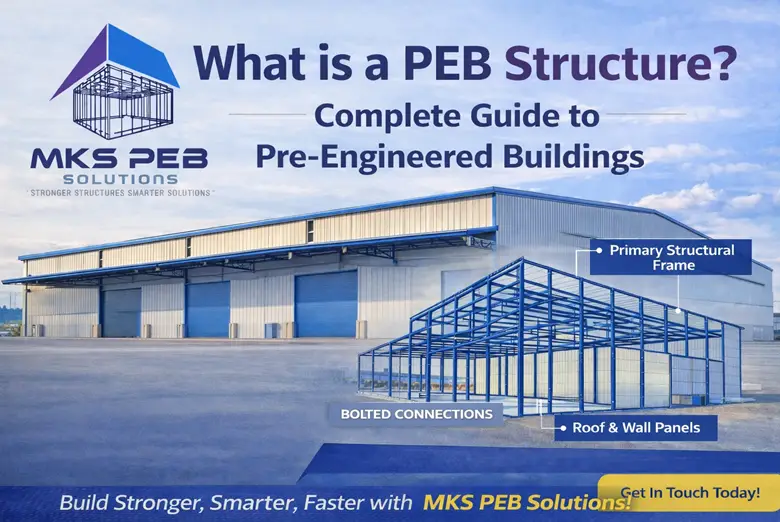
1. Primary Structural Frame
The primary frame includes steel columns and rafters that form the backbone of the structure. These components are designed to bear the entire load of the building.
2. Secondary Structural Members
Secondary members include purlins, girts, and bracing systems. They provide additional support to the roof and walls, ensuring stability and strength.
3. Roof and Wall Panels
Roof and wall panels are typically made from high-quality steel sheets. They are available in various designs and coatings to meet both functional and aesthetic requirements.
4. Bolted Connections
All PEB components are connected using high-strength bolts. This eliminates the need for on-site welding and speeds up the construction process.
5. Mezzanine Floors
PEB structures can include mezzanine floors to maximize space utilization. These floors are ideal for offices, storage, or additional work areas.
6. Building Accessories
Accessories such as doors, windows, ventilators, skylights, and insulation systems enhance the functionality and comfort of the building.
How Are PEB Structures Manufactured?
PEB structures are manufactured in a controlled factory environment using advanced machinery and automated processes.
The manufacturing process includes:
- Cutting and shaping steel components
- Welding and drilling with precision
- Surface treatment and coating
- Quality inspection
Once manufactured, the components are transported to the site and assembled using cranes and skilled labor.
This process reduces construction time, minimizes errors, and ensures consistent quality.
Applications of PEB Structures
PEB structures are highly versatile and can be used across various industries.
Industrial Buildings
Factories, manufacturing units, and processing plants benefit from PEB structures due to their strength and large span capabilities.
Warehouses and Logistics
PEB buildings are ideal for warehouses because they provide open spaces for storage and efficient operations.
Commercial Buildings
Retail outlets, showrooms, and office spaces can be designed using PEB systems with modern aesthetics.
Educational Institutions
Schools, colleges, and training centers can be built quickly using PEB technology.
Aircraft Hangars
PEB structures are perfect for aviation facilities due to their ability to cover large areas without internal columns.
Agricultural Buildings
They are widely used for storage sheds, poultry farms, and dairy units.
Infrastructure Projects
PEB systems are used in metro stations, toll plazas, and parking structures.
Advantages of PEB Structures
Faster Construction
PEB structures can reduce construction time by up to 50% compared to traditional methods. This helps businesses start operations quickly.
Cost-Effective Solution
The use of standardized components and efficient design reduces material waste and labor costs, making PEB structures more economical.
High Quality and Precision
Factory manufacturing ensures consistent quality and precise dimensions, reducing errors during construction.
Strong and Durable
PEB structures are designed to withstand harsh weather conditions, including heavy winds and earthquakes. They require minimal maintenance over time.
Eco-Friendly Construction
Steel used in PEB structures is recyclable, making them an environmentally friendly option. They also generate less construction waste.
Design Flexibility
PEB systems allow easy customization and future expansion. Buildings can be modified without major structural changes.
PEB Structure vs Conventional Building
| Feature | PEB Structure | Conventional Building |
|---|---|---|
| Construction Time | Faster | Slower |
| Cost | Economical | Expensive |
| Quality Control | Factory-based | Site-dependent |
| Material Wastage | Minimal | High |
| Flexibility | High | Limited |
| Sustainability | Eco-friendly | Less eco-friendly |
Why Choose PEB for Modern Construction?
With increasing demand for faster and smarter construction solutions, PEB structures are becoming the first choice for businesses and developers.
They offer:
- Quick project delivery
- Lower overall cost
- Long-lasting durability
- Modern design capabilities
These benefits make PEB systems a reliable and future-ready construction method.
Conclusion
Pre-Engineered Buildings have revolutionized the construction industry by offering efficient, durable, and cost-effective solutions. Their ability to reduce construction time while maintaining high quality makes them ideal for a wide range of applications.
As industries continue to grow and demand smarter infrastructure, PEB structures will play a crucial role in shaping the future of construction.
If you are planning to invest in a modern building solution, choosing a trusted company like MKS PEB Solutions can help you achieve high-quality results with precision and reliability. With expertise in delivering advanced steel building systems, they ensure every project meets the highest standards of performance and durability, especially for businesses looking to expand in Madhya Pradesh.
Frequently Asked Questions (FAQs)
Q1. What is a PEB structure in construction?
A PEB structure is a pre-designed steel building system manufactured in a factory and assembled on-site for faster construction and better quality.
Q2. What does PEB mean in construction?
PEB stands for Pre-Engineered Building, which refers to buildings made using pre-fabricated and standardized components.
Q3. What are the benefits of PEB structures?
PEB structures offer faster construction, cost savings, durability, flexibility, and eco-friendly construction.
Q4. Where are PEB structures used?
They are used in warehouses, factories, commercial buildings, schools, hangars, and infrastructure projects.